February 11, 2026
Charitable Organizations – Charitable Donation and Tax-Exempt Status – Revocation (Keeping Charities Nonpartisan Act of 2026)
I respectfully oppose SB 004.
While maintaining public trust in charitable organizations is an important goal, this legislation raises serious concerns about government overreach, free speech, and unintended consequences for nonprofit groups that serve Maryland communities every day.
Charities and nonprofit organizations often engage in public education, issue advocacy, and community outreach on matters that affect the people they serve. SB 004 risks chilling lawful expression and civic participation by threatening tax-exempt status based on vague or broadly interpreted standards. Such uncertainty could discourage organizations from addressing important social, moral, or public policy issues, even when doing so is entirely lawful and beneficial to the public.
The bill may also disproportionately affect faith-based and community-based organizations that rely heavily on donations to operate essential services such as food pantries, shelters, educational programs, and disaster relief. Revoking tax-exempt status or charitable-deduction eligibility would reduce their ability to meet community needs and could ultimately harm the very people these organizations are meant to help.
Maryland already has legal frameworks in place to prevent improper political activity by nonprofit entities. Creating additional penalties or unclear enforcement mechanisms risks politicizing charitable oversight and placing unnecessary burdens on organizations that are acting in good faith.
For these reasons, I urge the committee to give SB 004 an unfavorable report.
Brigitta Mullican
From the Maryland Family Institute:

I am writing to alert you to a deeply troubling bill in Annapolis:
Senate Bill 4, the “Keeping Charities Nonpartisan Act of 2026" (https://mgaleg.maryland.gov/2026RS/bills/sb/sb0004F.pdf).
The title itself betrays a fundamental misunderstanding of freedom of association and thought—our political parties and candidates are downstream from ideas, and government has no business conditioning nonprofit status on a promise not to share those ideas.
SB 4 says that if a church or religious nonprofit ever “participates in or intervenes in” a political campaign for or against a candidate—even by publishing or distributing a statement—the State can punish them. It authorizes the Secretary of State and Attorney General to impose civil fines of up to $5,000 per violation and then strip away Maryland income‑tax, sales‑tax, and even property‑tax exemptions for two years, including exemptions for church buildings, parsonages, and religious schools.
In plain terms, if pastors or religious organizations speak clearly about candidates and elections, the State of Maryland is threatening to treat them like lawbreakers and fine them into silence. That is government retaliation against core political and religious speech—exactly what the First Amendment is supposed to forbid. How do they plan on policing this? Well, it's by monitor sermons, church communications, and ministry statements to decide whether they “intervened” in a campaign.
SB 4 goes even further by forcing charitable and religious organizations, on their registration forms, to promise that they “do not and will not” engage in this candidate‑related speech as a condition of operating and retaining tax exemptions. That is an unconstitutional condition: the government is effectively saying, “Surrender your First Amendment rights or lose your legal status and tax protections,” even though our basic freedoms of thought, speech, and association protect the right of churches and ministries to speak about public life and those who seek to govern.
All this comes at the very moment when the federal government has been backing away from the most aggressive reading of the Johnson Amendment. In the National Religious Broadcasters litigation, a July 2025 consent judgment and related IRS filings acknowledged that churches may address political candidates and elections with their congregations through their customary religious channels without automatically losing their tax‑exempt status. In other words, even the IRS has recently recognized that not all candid political talk from the pulpit is forbidden “campaign intervention,” yet SB 4 tries to slam the door in Maryland and punish churches that exercise this freedom.
Hearing Wednesday 2/18 at 1:00 p.m.
Sign up on Monday 2/16.
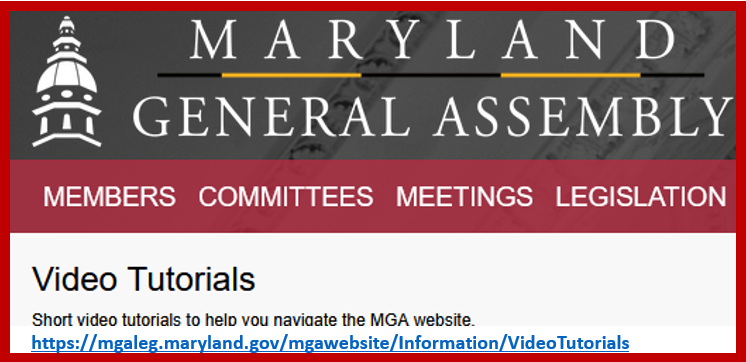
One of the most important contributions that you can make is testifying to legislative committees. The legislature has provided the following resources:
2026 Senate Witness Guidelines
2026 House Protocol Guidelines
We urgently need your help to stop this.
Please do three things:
1. Contact your State Senator and Delegates and urge them to OPPOSE SB 4. Tell them this bill is an unconstitutional assault on religious liberty, free speech, and the autonomy of churches and faith‑based charities.
2. Ask them to vote NO on SB 4 in committee and on the floor, and to reject any attempt to punish churches for preaching and teaching on candidates, elections, and the ideas that shape our public life.
3. Share this message with your pastor, church leadership, and other ministries, and encourage them to contact their legislators.
Maryland should never use the tax code to muzzle the pulpit or silence faith‑based charities. SB 4 crosses a bright constitutional line and must be defeated.
Thank you for standing for religious freedom and for making your voice heard.
Sincerely,
Jonathan Alexandre
Legislative Counsel, Maryland Family Institute