By Ken Dalecki
When I heard the stunning news of Nicolas Maduro's capture by U.S. forces my first thoughts turned to Cuba, Venezuela's patron devil. Trump's bold action has the exciting protentional of finally freeing the Cuban people from the scourge of the communist military dictatorship in power for over 65 years.
I covered foreign affairs during much of my time as a journalist and spent several weeks in Cuba at the height of the Elian Gonzalez affair in 2000. Elian's mother drowned trying to escape to Florida from Cuba with her six-year-old son. I was in Havana shortly before President Clinton's U.S. Attorney General Janet Reno ordered federal officials to seize Elian from relatives in Miami. He was taken at gunpoint and returned to Castro's Cuba.
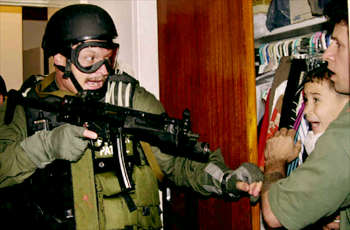
Photo by Alan Diaz (AP)
My time in Cuba left me feeling profoundly sad for the Cuban people. They could be living on the most prosperous island in the Caribbean. Instead, they are frozen under a repressive military cabal surviving only through the largess of kindred regimes such as the Soviet Union/Russia, China and Venezuela. Now, thanks to Trump's actions, the Cuban regime has lost a its last significant ally whose demise may finally prompt the regime's collapse.
Maduro's security team was led by Cubans, scores of whom were killed during his capture. Such thuggish security services are one of ways the regime supports itself. Another is providing rudimentary medical services in poor countries. For decades Cuba has sent doctors throughout central and South America as part of an influence peddling and money-making scheme. In exchange for temporary leave from the island prison, the doctors kick back much of their foreign salary to the regime.
Most Americans are profoundly ignorant of how the average Cuban lives. Some have visited exclusive beach resorts or, like movie producer Michael Moore, boutique medical facilities. During my visit I teamed up with Chris Marquis, and experienced Latin American correspondent for the Miami Herald. While visiting Elian's home town of Cardenas, we interviewed the director of the provisional hospital who spoke freely under the assumption that we represented foreign aid providers. (He risked time in the Cuban gulag had he known that "Knight-Ridder" and "the Kiplinger organization" were news organizations rather than philanthropic drug manufacturers.) Although a major hospital, emergency services had been suspended for lack of supplies. Soviet-era X-ray machines were no longer working. Mold covered the walls. There was no air conditioning.
A few miles aways was a beautiful beach resort patronized by Canadians and Europeans who rarely ventured off the property. Cubans with jobs in European-developed hotels work for the state. One major hotel manager told me he gave workers under-the-table bonuses to supplement their pay, most of which went to the regime. Foreign investors thought they could make a killing in Cuba because Americans were barred, but they soon learned that kickbacks, corruption and guaranteed profits for the regime dashed those hopes.
Chris and I were introduced to the hospital director by his cousin, an engineer by training who made more money as a cab driver from tourists' tips. That was and probably still is a common tale. Tourism is big business, especially in Havana and in the historic port area restored by Unesco World Heritage aid. When under extreme economic stress, the regime may temporarily loosen restrictions on private enterprises such as family-run restaurants and food markets. I visited such a restaurant made famous in the movie "Strawberry and Chocolate." It was on the top floor of a decaying once-grand hotel on a pitch-dark pot-hole ladened street off the tourist track. It's few patrons included what appeared to be party apparatchiks and their young "dates."
While travelling between major cities over highways built by the Soviets for military purposes, we saw scores of Cubans hitchhiking rides on passing trucks. Horse-drawn carts were a common sight in towns. Farmers plowed their fields with oxen for lack of tractors or fuel. The street where Elian lived was a Potemken village: Cinder-block row houses on all sides were freshly painted to impress visiting photographers. Elsewhere houses were unpainted and in disrepair.
The Cuban regime held daily protests outside the former U.S. embassy on Havana's waterfront during the Elian affair. Students were bussed to the demonstrations, ironically in buses donated by liberal U.S. school districts. They were lured by popular rock bands and handed Cuban flags to wave for the cameras. Students left the rallies once the bands stopped playing and regime politicians started talking, often dropping their flags on the ground.
The Cuban regime and U.S. critics blame the U.S. trade blockage for the regime's woes. But Cuba can buy from anywhere else, including U.S brands such as Ford from Canada and Mexico and food and medicine is not embargoed if Cuba can pay for them. President Trump has said Venezuela perpetrated the greatest theft of American property in history when it nationalized U.S.-owned oil companies, but one could argue that Castro stole much more. Billions in claims are still pending.
No one can tell how events in Cuba and elsewhere in the region will play out. There have been many false hopes in the past. But Trump seems resolved to ridding the hemisphere of gangster regimes and drug cartels. Let's hope he succeeds.
Ken Dalecki is a member of the Executive Committee for Legislative District 20.