By Ken Dalecki
My father was a holocaust denier during World War II. Unlike today's crop of deniers and increasingly bold antisemites gaining prominence in the Democrat Party, he had understandable reasons for his holocaust skepticism. But he came to accept the horrific truth when it was given to him by an undeniable source: His own son.
My father was born in Germany in 1896. He was 18 years old in August 1914 and serving in the Kaiser's guard in Potsdam when World War I began. Like millions of young men on all sides of that war, he served his country when called upon. He fought in the trenches alongside more than 100,000 German Jews, including thousands who, like him, won the Iron Cross for bravery in combat. He was badly wounded and out of the war in 1916.
Antisemitism was common throughout Europe in those years, most strongly in Russia where, unlike Germany, Jews were denied citizenship. At the outbreak of war, Kaiser Wilhelm changed long-standing policy by allowing Jews to serve as officers up to the rank of captain. Serving bravely in war was seen as a doorway to equal social status for German Jews who had already achieved distinction in many other fields.
In 1926, my dad joined other family members who had immigrated to the U.S. decades before. He was soon joined by my mother and two-year-old son, Robert, and he quickly and proudly earned U.S. citizenship. Reports of Nazi atrocities during the war were hard for him to believe given the status of Jews that he had seen before leaving Germany. Adding to his skepticism was the role anti-German propaganda had played in World War I. The British were particularly successful in motivating their people by vilifying German troops during the invasion of Belgium. In France on Christmas morning 1914, German and British soldiers in the trenches initiated on their own Christmas truce, exchanging sentiments that horrified the generals. Both sides stepped up vilification of the enemy. Surely, my father believed, reports of Nazi atrocities were another example of wartime propaganda.
My brother Robert went to war straight from high school. He landed on Omaha Beach in France two months after D-Day and quickly moved to the front with the 179th Engineer Combat Battalion. By war's end, he was a 19-year-old staff sergeant having earned a Bronze Star leading Patton's 3th Army soldiers across the Saar River. Bridge-building engineers were the tip of the U.S. Army's spear against German opposition and among the first to witness the horrors of Nazi death camps.
Gen. Dwight D. Eisenhower, the Supreme Allied Commander in Europe, insisted that the death camps be filmed and documented and that local residents be marched through them to bear witness. Although repulsed at what he saw, he toured the camps "to testify at first-hand about these things in case there ever grew up at home the belief or assumption that 'the stories of Nazi brutality were just propaganda.'" That's the same message my brother delivered to my father when he returned from Europe in late 1945.
It is disconcerting to see antisemitism on the rise in our country. I have always felt that one of the great accomplishments of my post-World War II generation was ending this plague. I heard antisemitic rhetoric from older folks in my youth, but not from my contemporaries. Many of my friends then and now were and are Jewish. We went to school together, attended Boy Scouts, and did everything kids and young adults do together. The churches and synagogues we attended never interfered with that. Harvard law professor emeritus Alan Dershowitz, a long-time Democrat, recently joined the GOP in response to his old party's growing anti-Israel and antisemitic leanings. It's a sad commentary on our current body politic. We must fight back, starting by ending any "speculation" about the horrors of the holocaust.
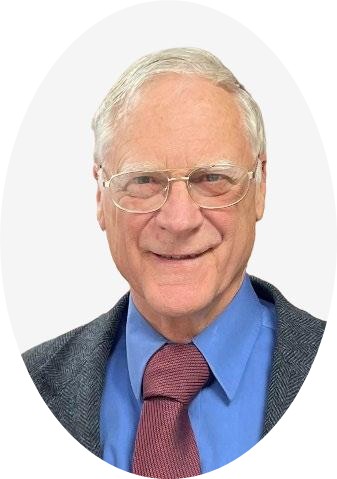 Ken Dalecki is a member of the Montgomery County Republican Party Executive Committee.